Amazing leather. Amazing fit. Classic construction.
A practical look at the classic cabretta glove: what is on the panel, how the nine-round size run works, and how to read the leather grades. Choose by hand measurement, then tell us how the glove sits.
- Subject
- Cabretta golf glove · left hand
- Material
- Cabretta · two cutting thicknesses
- Fit
- Nine rounds · measured by circumference
- Notes
- 001 construction · 002 sizing · 003 grading
- Photographs
- Three bench views, I–III
- Ordering
- Enquiries by email · no checkout on this page
Classic is a construction, not a style.
A golf glove has been made one way for a very long time. A cabretta panel over the palm. Perforations through the fingers so the hand breathes. A gathered wrist. A tab that closes over it. That is the whole glove, and it is the whole glove we make.
Nothing moulded is stuck to the knuckles. Nothing synthetic is laminated into the palm. No grip film is printed on the fingers. The result is a straightforward cabretta glove built around the material, the shape of your hand and a secure wrist closure.
Our patterns and sewing are deliberately traditional. We are not chasing novelty in the cut: the familiar construction keeps attention on what you feel first — the cabretta against the hand — and on the measured round that sets the fit.
The three notes below explain what to look for when you choose: the construction, the circumference-based size run, and the thickness and surface marks. The fit note lets you send us the round you wore and where it sat wrong.
A leather glove, built around the hand.
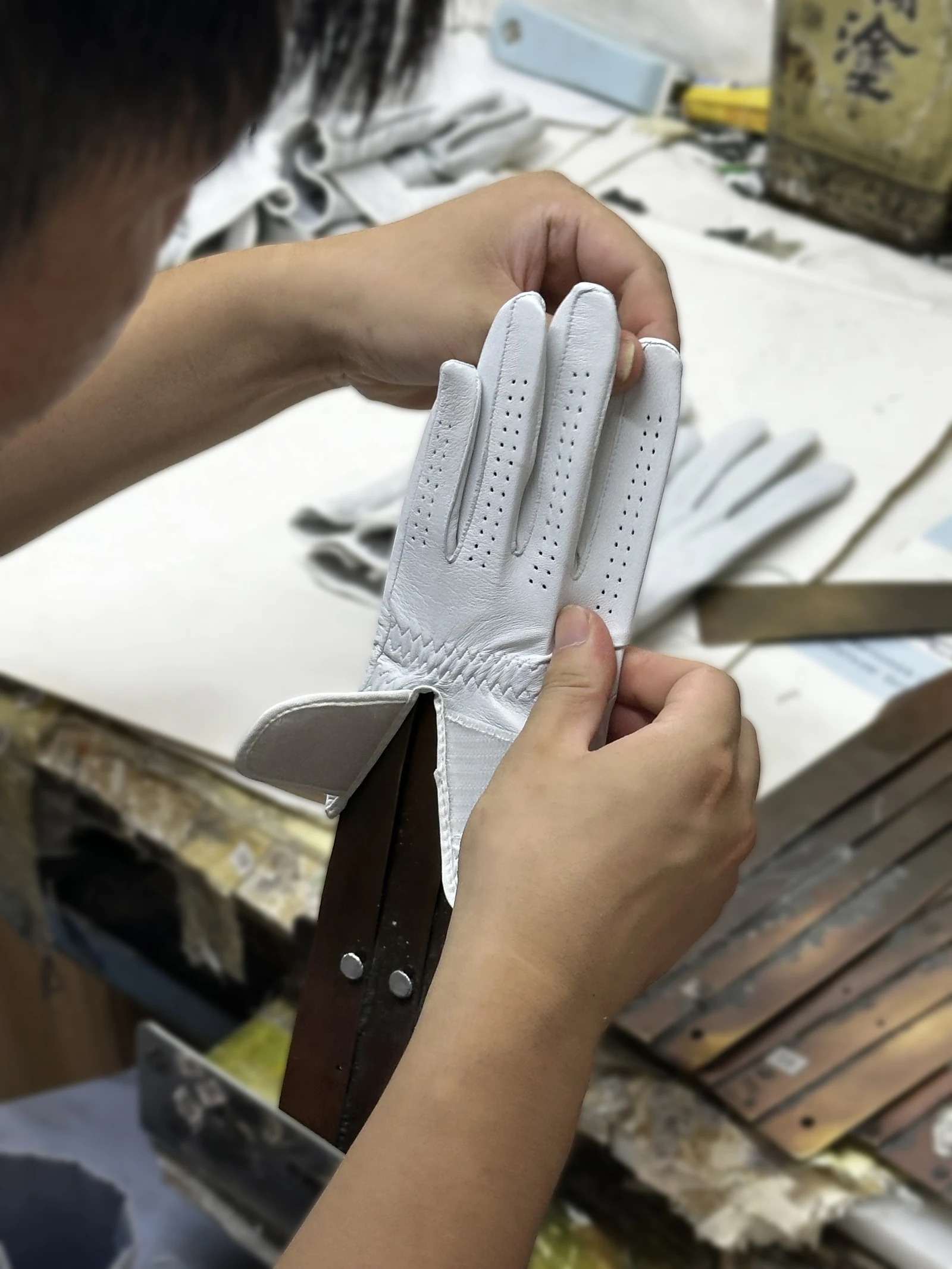
Fig. 1 shows the four features of the cut: the cabretta panel, perforated fingers, gathered wrist and closure tab. The notes below explain what each one does and what to check when the glove arrives.
Cabretta, without added grip layers.
The palm is cabretta. There is no moulded knuckle pad, synthetic palm laminate or printed grip film. Perforations run through the fingers for airflow, and the wrist closes with a gathered cuff and tab.
That makes the material easy to see and feel. Check that the palm is cabretta, the grade matches the mark you ordered, and the perforations run cleanly through the fingers. If the panel or the closure is not right, tell us what arrived.
A fit the trade already proved.
The run uses two shapes. Rounds 18 to 21 use a women's and junior form; 22 to 26 use a men's. The divide is finger length, not just circumference — a 21 and a 22 can measure the same around the knuckles and still be different gloves.
Use the round finder for your circumference, then check middle-finger length to choose a regular or shortened finger cut. If you are between rounds, take the larger one.
Read thickness and surface together.
Each mark has two parts. The number is the nominal cutting thickness: 5 at 0.50 mm ± 0.05, or 7 at 0.45 mm ± 0.05. The letter describes the visible surface: A has micro blemishes, B has small blemishes.
The two letters are available at both thicknesses. A and B are our surface marks, not a map of regions on a hide or an outside grading standard. Compare the panel you receive with the mark on your order. The four combinations are in Note 003.
Leather, fit and a clear description.
These are the product details we specify and the things to check when your glove arrives. If the material, mark or fit does not match the order, send us a fit note.
5 is cut at 0.50 mm ± 0.05; 7 at 0.45 mm ± 0.05. The surface mark is A for micro blemishes or B for small blemishes.
Choose across nine rounds from 18 to 26 cm. If your measurement falls between rounds, take the larger one, then use the fit note if it still sits wrong.
A cabretta palm panel, finger perforations, a gathered wrist and an embossed closure tab. No added grip film or synthetic palm layer.
Pick 5 or 7 for thickness, then A or B for the visible surface. Both letters are offered at both thicknesses.
These notes describe material, cut, sizing and surface marks. They do not make a durability, abrasion, stitching or wear-life claim, and they are not a guarantee policy. Ordering and fit questions are handled by email; there is no checkout on this page.
Tell us how it fits
Fit note — GRIPLYTE cabretta glove, left hand Round worn: 23 (23.0 cm · men's last) How it sat: Right Where: not stated
Nothing is sent from this page. The button opens a draft in your own mail application and you decide whether to send it. The round is shared with the round finder below — move either one and both follow.
These notes explain the construction, size run and leather marks. They do not claim a wear-test result or a stitching, durability or making-quality rating.
The tape, not the letter.
We sized the run before we designed the glove. Nine rounds, one centimetre apart, because the thing that decides whether a glove gets worn is whether it fits. A hand is a circumference, not a letter — and the market's letters are not comparable between two makers, let alone ten. So the tape measure comes first.
The run is cut on two lasts. Rounds 18 to 21 are on the women's and junior last; 22 to 26 are on the men's. The divide is finger length, not width — which is why a 21 and a 22 can share a circumference and still not be the same glove. Middle-finger length is the second dimension, and it decides one thing: whether a regular or a shortened finger cut sits better.
Measure around the knuckles with the hand flat and the thumb out of the tape. Read the number in centimetres. If it falls between two rounds, take the larger one: a tight glove is a glove you stop wearing.
Round finder
The slider is always centimetres. Between two rounds the finder takes the larger one, which is the rule we cut to. Middle-finger length runs roughly 6.8 cm at round 18 to 9.0 cm at round 26 — a guide, not a gate.
- Your hand
- 23.0 cm · 9.06 in
- Cut for
- Men
- Letter
- M
- Note
- The common men's size
Table 1 — the size run as cut. Rounds are hand circumference in centimetres; the inch column is the same measurement converted, not a second standard. The letter is shown only because buyers ask for it — it is not how the glove is specified.
Cabretta is the leather, not the grade.
Cabretta is a sheepskin. It names the leather, not a grade — good leather, and nothing more than that. So we do not borrow a grade from the trade. The four grades in this record are ours, set by the two things you can see on the panel before it is stitched: the number is how thick it is cut — 5 at 0.50 mm ± 0.05, 7 at 0.45 mm ± 0.05 — and the letter is what the surface shows, A micro blemishes and B small blemishes.
The letter is a surface observation, not a map of the hide. The 5A leather is specified across four sections — back, belly/flank cut, palm and butt/rump — so a letter cannot be a region. What sorts a panel is what its surface shows, read by hand before the cutting, at tanneries small enough that a parcel is not averaged into a bulk grade.
Two lines rather than one means a mark a training glove does not mind is not a reason to throw good leather away. So the B glove is the same hide as the A glove, with more of its life showing on the surface — not a cheaper substitute, and not a second-rate leather.
Grade matrix
Cut at 0.50 mm ± 0.05. Micro blemishes only — the panel a competition glove is cut from, specified across back, belly/flank cut, palm and butt/rump.
- Thickness
- 0.50 mm ± 0.05
- Range
- 0.45 – 0.55 mm
- Surface
- A — micro blemishes
- Sections
- Back · belly/flank cut · palm · butt/rump
The letters are ours. They are not a trade grade and they are not a certification. The section list is specified for 5A; the record does not assign a section to a letter. Every mark is cut in every round, 18 to 26.
Table 2 — the two axes. The number is a cutting thickness with a stated tolerance, the letter is a surface observation made before stitching. Nothing in either axis is a durability rating: no wear test sits behind this record, and none is claimed.
Thickness gauge
5A · 0.50 mm ± 0.05 · 0.45–0.55 mm
The two tolerance bands overlap across 0.45–0.50 mm, so a caliper reading on its own does not identify the mark. The digit is the nominal target the leather is cut to; the letter is read off the surface. Both bands stay drawn; pick a mark in the matrix above and the ring moves to its band.
Table 3 — the cutting thickness as specified: 5A at 0.50 mm ± 0.05 and 7A at 0.45 mm ± 0.05. The digit sets the thickness for both letters, so 5B is cut to the same band as 5A and 7B to the same band as 7A. The scale is drawn from those four numbers; the overlap is a property of the specification, not of the drawing.
Construction, at the bench.
Three frames from one sequence at the bench. They are printed here as taken — resized for the page, never cropped, retouched or colour-edited; the framing is done in the layout. Select a plate to see the whole frame.
The photographed glove shows a zigzag stitch across the knuckle and a plain embossed tab. The catalogue renders show a chevron perforation band and a G tab. They are different views and are not captioned as the same product detail.
A guide to choosing your glove.
The size run, cutting thicknesses and surface marks on this page are GRIPLYTE product specifications. The letters A and B are our own surface descriptions, not an outside trade grade.
The three bench photographs are shown as construction references. They are not product renders: the photographed glove and the catalogue renders have different knuckle and tab details. Use the catalogue for the product presentation and this page for material, sizing and grade guidance.
This page does not take payment and has no checkout. Email us with ordering or fit questions, or open the fit note to prepare a message.
Contact us
Send the GRIPLYTE team a note. We usually reply by email.
Hotspot reporting counts page-section time and clicks. It uses no cookies, form text, precise location or advertising identifiers. Contact details are used only to reply to this enquiry.